Saturday, January 2, 2021

Jump into 2021 with 2 good feet!

Don't let your feet be a disaster in 2021!
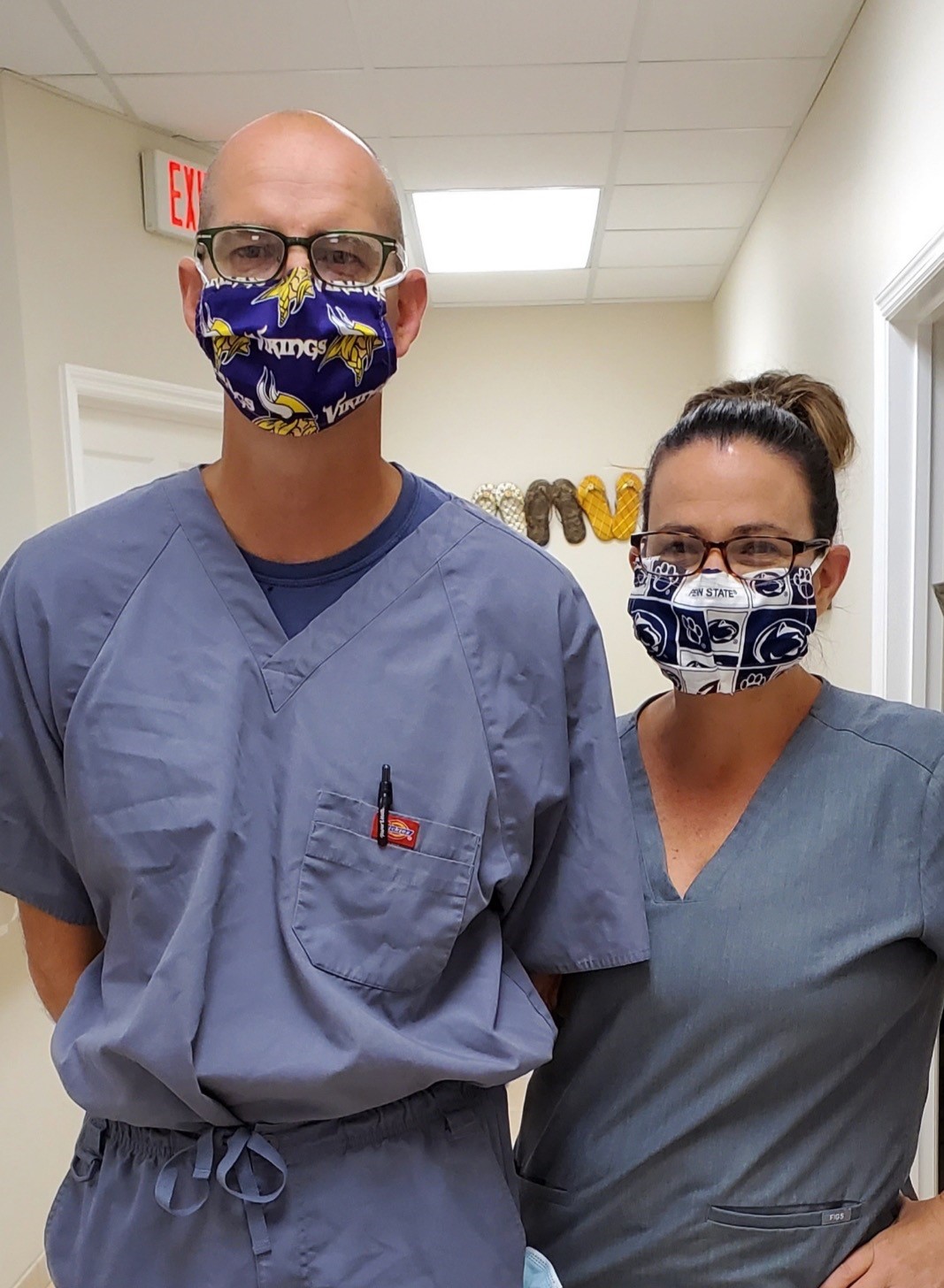
If there is anything we have learned in 2020, it is that the future is never certain for anyone.  But we all can take precautions for our health to keep us at our best.  As this new year begins we wanted to wish everyone a happy and healthy new year! We also wanted to assure everyone that we take your health and safety very serious at the Center for Ankle and Foot Care, and want to let you know we still have all of our Covid protocols in place. 

Our doctors and staff are working very diligently to keep you healthy and our office as a safe place for you to have your foot or ankle problem addressed. Dr. McGowan and Dr. Henne want you to be safe and stress free while they help you with your problem. 

We are continuing to have no waiting room, this decreases any patient to patient contact and to decrease any gathering in an enclosed space.  Every treatment room is thoroughly cleaned in between patients. "We are lucky enough in this environment to have an office that is big enough to accommodate multiple patients in individual treatment rooms, so people rarely have to wait in their cars" Dr. McGowan explains. "Patients just call when they arrive at the office and then they are instructed to what treatment room to go into when they enter the building."

Our facility is is equipped with onsite X-ray. This becomes such a great asset to the patient who has fallen and the pain is only in the foot, ankle or lower leg. We are able to accommodate same day appointments for foot and ankle related injuries.  "I think it is a great sense of comfort for patients to be able to get into a smaller environment like our office instead of an emergency room.  You don't need to avoid treatment if you have had trauma to the foot or ankle, you need to seek out your specialist who have the capabilities in their office to treat your problem.  Covid is not a reason for you to walk around on a broken ankle for 6 weeks" Dr. Henne explains.  


We have about 28 bones in each foot. Our feet take a big beating sometimes with everyday wear and tear.  When we walk, about two and a half times our body weight goes through our feet and running about 4 times or more our body weight.  These are things many of us do each day.  Without the right support or protection of your feet, these simple activities can cause foot and ankle problems like: stress fractures, tendonitis, plantar fasciitis and more.  

Getting any pain in your foot or ankle means your body is telling you that something is wrong and you should go get it checked out.  Ignoring foot pain very often turns into a much bigger problem than it originally would have been.  "It is not uncommon for people to ignore foot pain, but during the fall months of 2020, we saw many patients who just ignored real foot problems for 6 months or more. These people's prognosis was much worse.  Some diabetic patients who ignored a small wound for months went on to amputations.  Other patients who thought the pain in the ankle would eventually go away, had Achilles tendon rupture or other tendon problems that pushed them to surgical intervention versus the conservative route that would have helped many months ago" Dr. McGowan reflects. 

As 2021 is off and running, we want to make sure you know we are happy to see you in our office and get you back on your feet as quick as possible. Happy New Year from our family to yours!


The Center for Ankle and Foot Care
Michele McGowan DPM 
Timothy Henne DPM
3190 Citrus Tower Blvd STE A
Clermont, FL 34711
352-242-2502


Monday, September 28, 2020

Top two injuries we see in young soccer players

Injuries in Young Soccer Players & How We Treat Them


As youth soccer programs across the country try to return to normalcy during a Covid Era, we acknowledge the top two injuries we see in these kids and how we treat them. Our youngest has coerced me, Dr. McGowan, to coach. I honestly said yes right away, but that was because I thought it would be cancelled. I know, mother of the year! Well we had our first practice under our belt last Friday and first game this Saturday coming up. This is happening! As you can see from the ridiculously unflattering picture Dr. Henne shared on social media of myself with our youngest on the soccer field Friday night, things are different. Luckily the children do not have to wear masks and it is my job to try to keep them apart, this is not the easiest task. Coaches have to wear masks, which I am totally cool with this, I just can't wait for it not to be 90 degrees at 6 pm on Fridays!!!!

Ingrown Toenail


Soccer is a sport of constant touch on the ball. In fact, the more touches you have on the ball the better you will get over time. But the repetitive microtrauma of the constant tapping in the toe box of the cleat and the occasional getting stepped by the cleat of someone else can lead to an ingrown toenail.  Ingrown toenail is best understood by the definition of the inside or outside of the toenail digging into the adjacent skin.  If the nail is not easily clipped out and has not relieved the person of the pain they may have an ingrown toenail.  This can progress to a more serious problem as the good tissue that has the nail stuck in it will perceive the nail as foreign body and will progress to a little infection.  If you are a parent of one of these little soccer players the fix may be as easy as you cutting the offended border of the nail back to where you can see it is ingrown and having them using a little antibiotic cream and band aid.  If the pain persists I would recommend going to see your podiatrist.  There is a simple in office procedure that can be performed to remove the border of the nail and place medicine in the area of the removed nail so you do not have to incur another ingrown nail.   This procedure we perform on children on a daily basis and they can usually go back to practice the very next day.  


Add caption
Calcaneal Apophysitis(Sever's Disease)

Calcaneal apophysitis is an inflamed growth plate of the heel bone.  We sometimes sees this as early as 8 years old and can be seen in or recur usually up until about 14 years old.  It can occur up until the growth plate closes in the heel bone which is about 14 years old.  This is very common and we see this also on a daily basis in the office.  Often these children will complain of very significant pain in the heel. The repetitive stress that happens from playing sports like soccer causes motion and inflammation to the growth plate.  Usually the child will complain of pain on the back or the bottom of the heel, you may notice them limping or having difficulty participating in their sport. This happens in all kinds of youth sports like basketball, football, track and soccer.  Having played soccer for 20 years, I can attest to soccer cleats not having the most support or shock absorption that you may get in other athletic shoe gear, but that again goes back to the touch on the ball. Some of the world's best soccer players grew up playing barefoot in the street(which as a foot doctor I don't condone, lol). 


Treatment for this sometimes can be as simple as a little icing, anti inflammatory and more support on the foot on and off of the soccer field. Not going barefoot can help ease the pressure on the growth plate and help it heal faster.  I usually show these young athletes some simple calf stretches which can help decrease extra stress on the growth plate from the Achilles' tendon and could help them prevent other athletic injuries that are linked to a tight posterior lower leg muscle group.  If the simple treatment does not work it may be necessary to sit out a week or two from the sport and I usually place these young athletes in a cam walker boot. This will take a lot of pressure and strain off of the heel and helps them get to playing their sport quicker.  

Good luck to all athletes, coaches and parents trying their best to get their young athletes back to what they love to do.  Hoping we all can get through this season happy, healthy and back to a little fun and normalcy! 

Dr. Michele McGowan

Center for Ankle and Foot Care

3190 Citrus Tower Blvd Ste A

Clermont, Fl 34711

352-242-2502

centeranklefootcare.com


Sunday, September 13, 2020

Pandemic foot pain!! Top reasons why #myfeetarekillingme during the pandemic!


 I have heard and seen so many patients over the last 3 months who think they are having foot pain due to their increased activity level.  This becomes very disheartening for the person who wants to be in shape.  You suddenly have more free time than you want. It almost is the “no excuse season” for getting into shape.  Even Dr. Henne and I, even though we are seeing patients daily and have not decreased our time in the office, but we have  a lot more time in our personal life because our kids involvement in sports and extracurricular activities is diminished.  We personally have been running, lifting and biking consistently for several months now.  Dr. Henne looks skinnier, I look the same, lol. 

So of course, if you went from doing little to a lot you may think the increase in activity is the sole reason for your foot pain.  I do agree that some people over do it and develop tendonitis: Achilles’, peroneal or posterior tibial tendonitis are the most common three we have seen in the past couple months in addition to plantar fasciitis.   But the reality is the root cause of your pain may not be just the activity.  So many people have been home, barefoot walking around their house all day. 

The barefoot walking all day in the house is one of the top reason we are seeing patients for foot pain.  If you look at your foot’s bony architecture, like on this X-ray, you will see that these 28 bones need support in all different areas.  If you don’t have enough support for example and you put too much pressure on your forefoot it is very easy to develop capsulitis under the metatarsal heads for example.  This can be very painful from the repetitive micro trauma of walking on hard surfaces with no shoes on.  Many patients come in and say they don’t want to wear their outside shoes in the house especially now during COVID-19.  I usually show them a pair of Oofos flip flops or Hoka Flip flops.  I own both of these and depending on what is going on with your feet one of these might be the correct choice for you. My Oofos I have had for about 5 years and my Hoka’s for about 4 months I love them both and they are my go to shoe gear right when I come in the house after work or on Saturday and Sunday just milling around the house.


I would recommend that if you are experiencing foot pain and have had no trauma you may want to play around with having good support on your feet around the house.  I am not saying don’t go see your podiatrist because you want to make sure there is nothing more serious happening but you can not go wrong with more support around the house.  If you want to learn about more specific foot and ankle problems visit our website at centeranklefootcare.com


The oofos will run about $50 but last for a very long time  

The Hoka’s run from $50 to about $80 on Amazon, I think I purchased mine locally for a very fair price of about $50.  The real point is that if you are walking barefoot around your house more than you normally do, you are going to develop some foot pain.  This is usually pretty reversible if just having some support while walking around your house.  


Michele McGowan DPM

Center for Ankle & Foot Care

3190 Citrus Tower Blvd Ste A

Clermont FL, 34711

Centeranklefootcare.com