Monday, October 6, 2014

The War on Nail Fungus...the many battles you must fight to kill nail fungus!!!


http://centeranklefootcare.com/id46.htmlNew treatment modalities for different medical conditions come and go. When we first heard about the PinPointe Laser for toenail fungus we were certainly skeptical about it being a miracle cure for fungus.This laser has been available on the market since 2007 and when we first heard of this laser, we thought here goes another trend that will cost the patient a lot of money and won't work. I thought this device would leave as quick as it came. This did not happen, in fact, we started to have patients that we refer to as "Snowbirds" living here in Florida only part time, that had this procedure done up North with great success. Yes they had to wait 9 months or longer to see the return on their investment, but happy when they saw their result. This prompted us to investigate the PinPointe Laser in more depth. At the time, the PinPointe Laser was the only laser built from the ground up to kill nail fungus and was cleared by the FDA based on peer reviewed studies. When introducing a modality into your office for patients, you take a certain leap of faith that what you know from research and speaking to other physicians success stories will translate into success for your patients. 2012 the Center for Ankle and Foot Care introduced to PinPointe Laser for nail fungus into our practice.

We jumped into the laser for nail fungus feet first!(yes pun intended) We acquired our laser in February of 2012. Over the last 2 and 1/2 years we have developed protocols for the laser that work best for different case scenarios.  But before I ever discussed with patients the laser, I give them all of their treatment options.  I first discuss the topical approach, I do explain that topical success rate truly depends on if the fungus is under the nail or on top of the nail.  If the patient has a superficial fungus a topical can be effect.  If the fungus is under the nail, no dice! The thick nail and topical anti-fungal is a wildly unsuccessful combination.

If your nail is thick and fungal, an oral medication can be a treatment option.  Lamisil is the drug of choice.  We get what is called a liver function test, blood work to make sure your liver is free from disease.  If your liver function test is normal, you can take the Lamisil.  I make my Lamisil patients follow all of my laser patients after care.  They have to prevent reinfection with the same steps listed below.

The last option I discuss with patients is the PinPointe Laser treatment.  Some people can not take the medicine by mouth or just do not want to take the medicine by mouth.  They want the laser.

Many patients are interested in having the State of the Art PinPointe Laser Treatment for their discolored, thickened fungal toenails.  Before anyone jumps into having this procedure done, we sit down and explain to them why, what they do at home, is just as important as the Laser treatment itself. Yes the PinPointe Laser for toenail fungus is a great procedure, but patients have to be active in their roll to prevent any reinfection!
How the PinPointe Laser works is simple. This patented laser is specially designed to shine through your toenail and destroy the specific pathogens embedded in and under your nail causing the infection.  Unlike other lasers that are used for skin or pain treatments, the PinPointe™ laser is designed and used for only one purpose; to safely destroy molds and bacteria that cause fungus nail infections (Onychomycosis). If the nails is extremely thick it can take up 15 plus treatments and quite a bit of patience, as it truly takes 9 months to a couple years for a whole new nail to grow out.


Before the patient has the PinPointe Laser performed a thorough evaluation of the skin and nails is performed. If the patient has a bad case of athlete's foot, they will be given a prescription for a topical anti fungal for the skin. I would see them back after a couple of weeks before I would perform the laser treatment. I explain that success is dependent on the foot being in an environment that is free of fungus. If a patient has the PinPointe Laser procedure performed, what they do from that moment on can play a role in their success rate. Once we have performed this procedure, patients are given instructions on preventive care for the toes.


What to Avoid After Having the PinPointe Laser Treatment :
  • Any shoes that you have worn before the Laser (especially shoes you have worn without socks)
  • Nylons or panty hose
  • Going barefoot in environments that could expose you to fungus again
  • Pedicures in places that do not AUTOCLAVE instruments and take all precautions to protect you
  • Wet moist environmental exposure to feet(ie. constantly having wet shoes) usually occupational hazard
Why it is Important to Avoid these things After The Laser:
  • Any shoes that you have worn before the Laser was Performed are basically little incubators for the fungus, putting these shoes back on puts you at risk for reinfection!
  • Nylons do not breath, again causing an environment that will be moist and possibly be a red flag for your toes!
  • Taking precautions in environments that you are not familiar with is important, if Joe Schmo has fungus and you walk in his house barefoot, you are increasing your chance of reinfection!
  • Do not get a Pedicure unless you know: that all instruments are autoclaved, they use liners between each client, that the pedicure chairs are pipeless and tubeless, that they do not reuse any files on anyone and that they do not reuse nail polish from client to client!
  • If you are a landscaper, chef or someone whose feet are constantly getting wet at work, you need to change your shoes during the day and even consider spraying your feet with an anti fungal spray during the day while at work!

The laser is not in itself a miracle cure if the patient does not take an active roll in their own care.  The laser can dramatically improve the appearance of the nail and get rid of the fungus, but if you have a nail that has had previous trauma and the nail is deformed you still may wind up with a disfigured nail just fungal free.
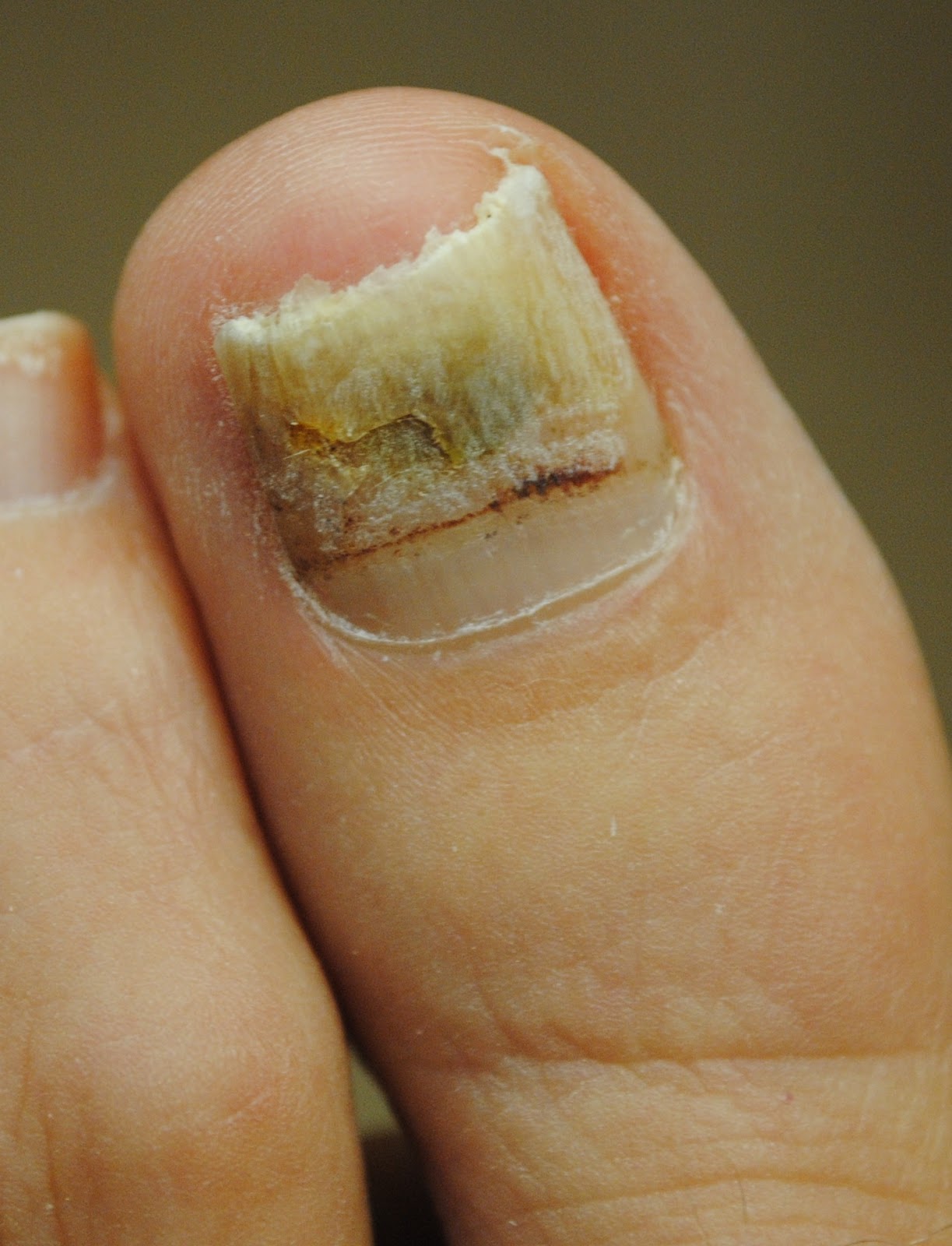


   Biggest rate limiting step for patients perceived successful outcome is how slow the nail grows. We do advise those with extremely thick nails, that they will most likely need multiple treatments and recommend our comprehensive care plan of the unlimited zaps until their fungus is gone.  We want people to know if they are serious about getting rid of their nail fungus we have something that actually works and worth the investment for their future good foot health. 

What we charge:
1. If your nails are not thick we recommend the 5 zaps for $500
2. If your nails are thick you should consider the unlimited zaps until your fungus is gone for $1500. We will be with you every step of the way until the fungus is gone!

If you are interested in learning more about the PinPointe Laser Treat for Nail Fungus click the link below. 
http://centeranklefootcare.com/id17.html 


Sunday, October 5, 2014

Stress Fractures: Week 5 Fantasy Football Ankle And Foot Injury Report


Stress Fractures
 A big deal in the NFL. 

 Simple problem if you have the TIME to heal.
         We are 5  weeks into the NFL season and stress fractures are ruining NFL players and fantasy football players seasons.  In the last 4 weeks the following players have had issues related to new or  old stress fractures: Michael Crabtree, Austin Seferian-Jenkins, Julio Jones, Manti Te'o,  and Marvin Jones.  So what are these "stress fractures" and what is the big deal?

I see stress fractures in the office almost weekly. They are very common and more importantly easy to treat!  The difficulty is in getting better.  Healing is 90% up to what the patient does and 10% what the patient is.  What the patient does (taking it easy) after the injury is often more important than who the patient is (healthy).  Before we get too far ahead of ourselves we should probably describe a stress fracture.

Two broken bones.
The one on the right is a "healing" stress fracture
The one on the left is "newer"

The best example of a stress fracture is to grab a branch from a  LIVE shrub or tree and bend it.  You will hear a snap, but the branch will stay together.  This is what happens to bones in the foot.  If too much stress is placed on the bone it will snap, but not fall apart.  That is why stress fractures are often not seen on X-rays.  The foot will start to hurt all the same.  If you keep bending the branch back and forth, eventually it will snap in two.  Likewise, if you keep "stressing" the foot (running, jumping, walking) the foot bone may also snap in two.

The treatment is SIMPLE.  Stop stressing your foot!  I typically give the patient a fracture boot and say, "If you wear this all the time, except for sleeping and bathing, you should be healed in 1-2 months.  BUT YOU HAVE TO TAKE IT EASY!  If you get the boot and pretend your foot is not broken and run around all day long it may take 2-6 months.  If you only wear the boot "sometimes" it may never heal or get worse.

The issue with football players is that they, "have to go to work"  aka play football.  This is why it is so difficult for them.  Often times surgery is done to help get them back playing faster.  Screws are often used to help protect the area until the bone heals.  This is rarely needed for patients in my office as they are not often professional athletes that need to play ASAP.  


A surgery may also need to be done if the bone does not heal and the patient develops a non-union.  Most of the time this is caused when the patient does not "take it easy" or wear the boot.  Operating on this type of person has additional challenges.  If the person did not listen to the doctor before surgery what makes you think that the will "take it easy" after surgery.  Extensive counseling, bone simulators and some good luck are often needed to heal the injury.


Most of the time stress fractures are caused by an increase in physical activity.  Either too much of a "old activity" or starting a "new activity."  Athletes will get these injuries from increasing the "old activity".  They are playing too much, too hard and over stressing their body.  More often, I see the starting a "new activity" causing stress fractures.  This is the person who is starting to get in shape or starts a a new exercise activity.  An example would be starting running 5 miles a day.  It is safer to start a half mile a day and increasing a half mile a week until you reach your goal of 5 miles. This often occurs to individuals who "take a month off". When start exercising again they need to slowly progress to their normal activities. 
http://centeranklefootcare.com/catalog/c1_p1.html
There has been a few studies that show orthotics "may" help prevent stress fractures.  I do not recommend orthotics to prevent initial stress fractures as most often corrected training is all that is needed.  I do use orthotics in "special cases".  These are certain patients with repeat injuries.  This may be caused by diabetes, osteoporosis, and even in long distance runners.  

Thursday, October 2, 2014

2 Pods and a Pickleball....3 most common foot and ankle problems andtreatments for our active Pickleball Patients!


Since we have a practice right in the heart of the "Pickleball Capital of the World" in The Villages Florida.  We decided to learn more about what this sport is all about, so maybe we can help our patients avoid foot and ankle problems and continue to keep playing the sport they love! There are approximately 140 pickleball courts in The Villages.  A pickleball court is 1/3 the size of a tennis court and the game itself abides by many of the same rules as tennis. The great part about this sport, I am told, is that it is lower impact and easier on the joints like the hips and knees.  But what kind of toll does it take on the feet, that's what I wanted to find out.

It is not uncommon at all to drive by a pickleball court in The Villages, and see players that are all 70 plus years old! (and quite frankly moving much better than some 20, 30 and 40 year olds I know) It is a sport that is enjoyed by all age groups and has been steadily growing in popularity.  According to the USA Pickleball Association, there are more than 100,000 active pickleball players in the United States.  It is not a very expensive sport to pick up and if you live in an area like The Villages, you won't have a hard time finding someone to play with! The story I read about pickleball originating from two dads in Bainbridge Island, Washington that were trying to give their kids something to do after complaining about being bored is classic.  But better yet,  today it is becoming a household name. I truly love stories like this.

To be complete I interviewed some people who play pickleball to see what are the most common injuries to the foot and ankle.  How did I find these rockstar interviews?  They were patients who also love to play the sport.  But the reason they came to visit me was due to pain in their feet or ankles.  I would like to first state that I don not believe that in all these cases pickleball was the culprit.  However, pickleball did help wrestle up some old injuries and they needed help to figure out how to get better and what to change so they can feel pickleball ready!

Of all of the people I have seen with pickleball injuries, the number one chart topper injury has been heel pain or plantar fasciitis.  The is a sharp pain on the bottom of the heel that is noticed for some people after periods of rest and getting up. Other people notice this pain is more pronounced after a
prolonged period of being on their feet playing pickleball.  This is usually a simple fix for the pickleball player as the culprit is shoe gear or lack of support in shoe gear.  Wearing the right kind of shoes could make a huge difference and for some people it is as easy as putting a little extra support in the shoe.  Also, for those new to the sport or who are just getting back into the swing of things they tend to forget to stretch regularly.  Stretching your calf muscles daily could be a foot saver and also prevent another problem like Achilles tendonitis! The largest tendon in your body, the Achilles tendon can also be aggravated by all of the short stopping and starting involved in Pickleball.  Stretching daily will ward off this as well.

Number two chart topper for my pickleball patients is recurrent ankle sprains.  Since, according to the USAPA 70% of the people playing pickleball in this country are 60 years or older, it makes sense that this group may have had a better chance of a couple ankle sprains over the years.  Remember, the more active you are the more you open yourself up to injuries over the years.  If you have had  previous ankle sprain and you want to play pickleball take precautions to avoid future sprains. First, a high top sneaker will provide you with more stability in the ankle.  I have a good suggestion for a type a shoe below.  If you already have your lucky pair of pickleball shoes and don't want to buy another pair, start wearing an ankle support, at least like an ACE slip on ankle brace seen here.  It is much easier to prevent the injury then treating the sprain.  An ankle sprain could keep you off thecourt in a walking cast for 8 weeks up.

The number three chart topper that we will talk about today is foot arthritis flare ups in the foot and ankle.  Though this is a sport that is less pounding for the knee or hip, there is an awful lot of pivoting and shuffling of the feet. Sometimes this can aggravate old issues and mature joints.  Again, this really comes back to what you put on your feet.  If your shoes are not supportive enough you need to get an insert to provide extra support or BUY NEW SHOES! But with the arthritis, the key is, in the absence of motion across the joint, the less pain you will experience with wear and tear arthritis.

I thought I would start give some advice on the best kind of shoes for a sport like pickleball.  Remember, even though it is low impact on the knees and hips, your feet are a different beast.  Your feet are taking up most of the little repetitive micro-trauma that pickleball can provide if you do not have the right kind of shoes or support.  I see many people in my Villages office who present with heel pain, painful toes and peroneal tendonitis(outside of the ankle strain) on many occasions after several weeks into the start of a new pickleball season (ie now, as many snowbirds are returning to the South). So it is very important to have the right shoe gear on to decrease your possibility of any foot or ankle problems.

So the shoe you should wear really can be determined by if you are playing indoor pickleball or outdoor pickleball.  From all of my research, I have come up with 3 key points about pickleball shoes:

1.  If you are playing on an indoor court, it is probably better to look for a shoe that you would wear for racketball
2.  If you are playing on an outdoor court, you want to lean closer to an official tennis type sneaker
3.  I need to research, develop and sell my own pickleball shoes, because as of right now, the fastest growing sport in America is getting the shaft on shoe gear

Let's talk a little more detail of the type of shoe you should look for depending on your foot history.
If you are someone who has had frequent ankle sprains and you really want to play pickleball, wear a high top sneaker. Regardless if it is indoor or outdoor pickleball, you need the the extra stability on the outside of your ankle, it could be the difference between playing year round or out for 6 months because of recurrent sprains.  The shoe I liked the best for the frequent ankle sprainer was the Prince's NFS (which stands for natural foot shape).  This shoe has the higher heel counter in the back which will give the rearfoot more stability.  This shoe also has a little more room in the toe box, which is a major plus.  Many people who play this sport can be so caught up in it that they could be on the court for 4 plus hours.  In the Florida heat, that can equate to a little more swelling of the feet, so the wider toe box is a must, even if you think you have cute narrow feet!


If you are someone who has ever suffered with Plantar Fasciitis or heel pain, pickleball could have you faced with your own set of concerns and aches.  Like almost everything in the medical field, prevention is better than having to get treatment.  This means your pickleball shoes need more than average support when you have plantar fasciitis.  The shoe that I thought was the best for women who have a history of heel pain was the ASICS GEL-Resolution 5.  Besides the sleek loom the shoe has a lot to offer the pickleball player who has had heel pain in the past.  This is a form fitting shoe that touts the Asics P.H.F. which stands for the personal heel fit system.  This shoes is lined with 2 layers of memory foam at the heel counter so the shoe conforms to the heel in the back with out causing any blistering, nice.  Also this shoe has mid-sole protection for the plantar fascia.

For the men who have experienced plantar fasciitis and who want to reduce their risk of getting it again, I found the  Asics Gel Resolution 5, which touts all of the same great features of the womens version above. It is a great shoe and will give you the support you need.  Extra perk, every time you look at your shoes you will be reminded of Darth Maul by these awesome colors if you are a Star Wars fan!

Let's say you are already someone who owns shoes for pickleball but just want a little more support.  Well than you probably could get a really great athletic over the counter insert to provide you with this support.  I will now shamelessly plug our Center for Ankle and Foot Care over the counter inserts designed by Dr. Henne and myself for plantar fasciitis.  It is an athletic inserts and is full length and is a firmer support than you can get at a drug store.  There is a break in period that may take you 5 -14 days to feel better with them in the shoes.  They are available for sale at our webpage at centeranklefootcare.com or click the picture of the orthotic to be brought right to the page to order them.

If you are a pickleball player, we salute you for being a part of the coolest sport we have seen come along in along while! If you live in The Villages, Florida and you are having pain in your feet and you play pickleball put your feet in the caring hands of Dr. Michele McGowan or Dr. Tim Henne.  They will help you get back on the court faster that you can say pickleball!